Event Security in Seattle and Tacoma: What Organizers Need to Know Before Summer 2026
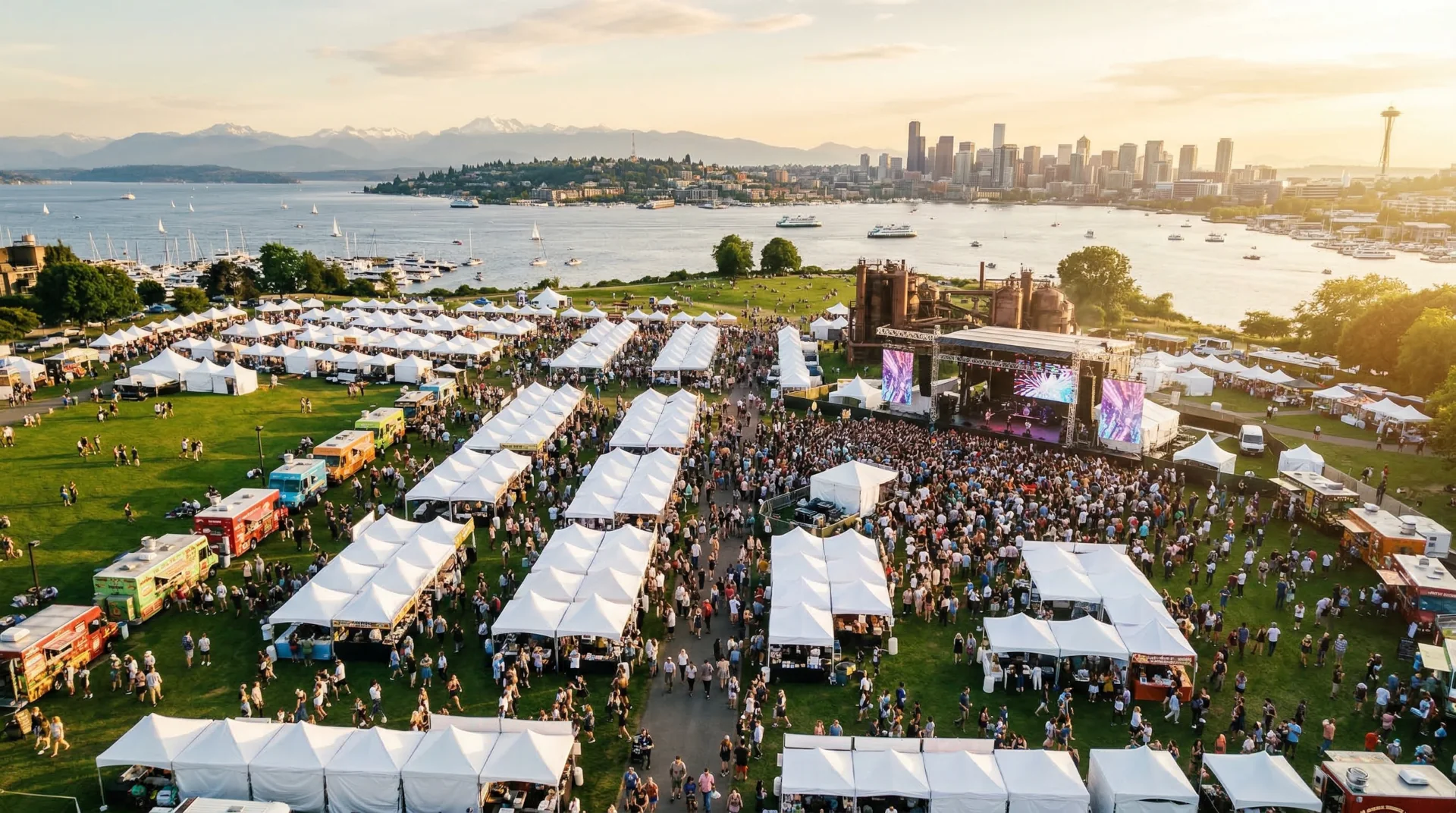
Summer 2026 is shaping up to be the biggest event season the Puget Sound has ever seen. The FIFA World Cup brings an estimated 750,000 visitors to Seattle. Seafair runs 40+ events from mid-June through early August. The Bite of Seattle, Bumbershoot, and dozens of community festivals fill every weekend from June through September. And all of this is happening in a city that ranks third worst nationally for property crime. Here's what event organizers and vendors actually need to plan for.
Quick Answer
What security do outdoor events in Seattle and Tacoma require in 2026?
Seattle Fire Code (SFC 403.3) requires 1 trained crowd manager per 250 attendees for any event exceeding 1,000 people. All events on public land need minimum $1,000,000 general liability insurance per occurrence - $2,000,000 if alcohol is served. Events with 5,000+ attendees must coordinate medical staffing with King County Medic One. Security guards for events cost $45-$65 per hour per officer. Mobile surveillance trailers offer an alternative for parking areas, vendor zones, and perimeter coverage at a fraction of the cost, with setup in under 30 minutes and no infrastructure requirements.
Summer 2026: The Busiest Event Season in Puget Sound History
Summer 2026 is going to stress-test event security across the Seattle-Tacoma corridor. The event calendar is stacked in a way it hasn't been before.
The FIFA World Cup lands at Lumen Field for six matches between June 11 and July 19. Seattle's organizing committee has set up fan celebration zones at Seattle Center, Waterfront Park, Pacific Place, and Victory Hall in SODO, connected by a 4.25-mile Unity Loop walking trail through downtown. Nine additional fan zones are planned across Washington, from Bellingham to Spokane, including one at the Puyallup Tribal Headquarters near Tacoma. Former Seattle Police Chief John Diaz, who's heading up World Cup security operations, told reporters the event carries a SEAR 2 rating - one step below the Super Bowl. His team has 27 working groups coordinating security across the state.
Then there's everything else. Seafair runs mid-June through early August with 40+ events reaching over two million people. The Bite of Seattle takes over July 24-26 with 250+ food vendors and 50+ musical acts. The Washington State Fair in Puyallup drew 912,000 visitors in 2024 and runs August 29 through September 21. Bumbershoot closes out the season September 5-6 at Seattle Center.
The City of Tacoma is supporting 28 community organizations with event funding for 2026 - everything from neighborhood block parties to cultural festivals. Add in farmers markets, Pride events, concert series, outdoor movie screenings, and private corporate gatherings, and you're looking at hundreds of permitted outdoor events across the region between May and October.
Each one of these events creates a temporary venue that needs to be secured. And that's where many organizers - particularly smaller ones running their first or second event - run into trouble.
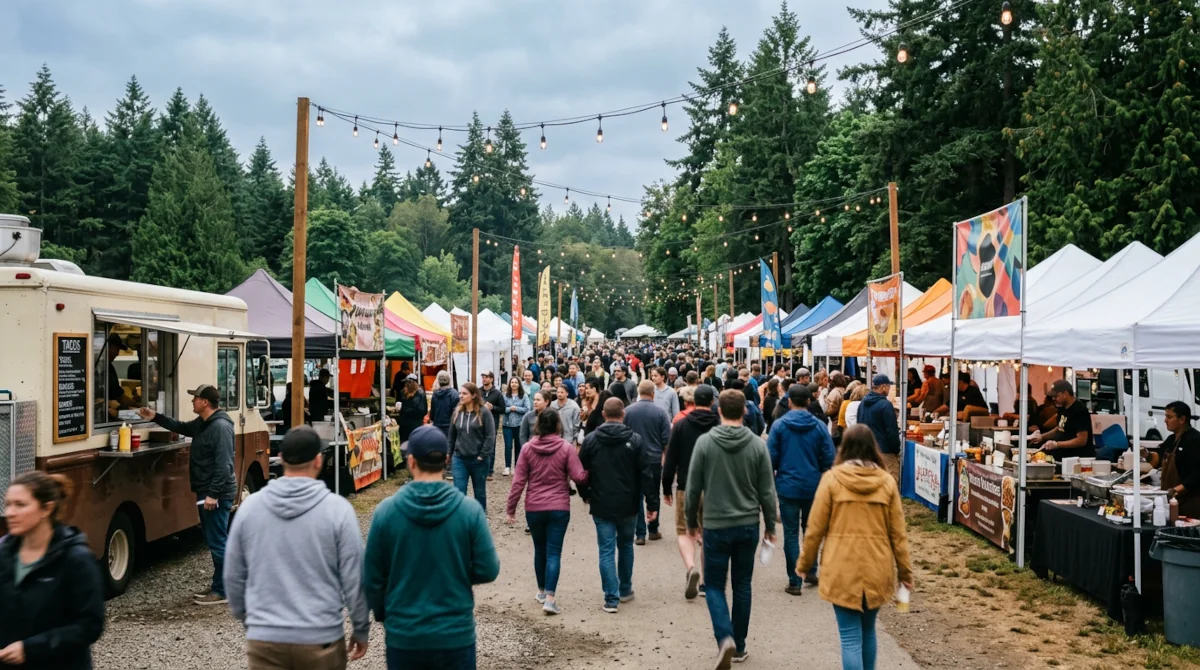
A packed summer festival in the Puget Sound region - the kind of event where security planning needs to start months before the first vendor tent goes up.
What Happened at the Bite of Seattle Is a Warning
In 2024, the Bite of Seattle drew big crowds across its three-day run. It was, by most accounts, a successful event. But behind the scenes, vendors were dealing with something the organizers hadn't adequately planned for.
Artist Courtney Correia's booth was ransacked overnight, resulting in more than $1,500 in stolen handmade merchandise - prints, hoodies, t-shirts, artwork, and stickers. Another vendor reported over $600 in stolen equipment and filed a police report. Multiple vendors alleged that the festival's overnight security was inadequate and failed to protect their booths.
This isn't unusual. Festival vendor theft is one of the most under-reported security problems in the events industry. Vendors can pay $1,500 to $3,250 for booth space, haul in thousands of dollars of inventory, then leave it overnight in a tent with a zipper for a lock. The typical security arrangement - a couple of guards walking the perimeter - leaves massive gaps, particularly in the overnight hours between teardown and the next morning's setup.
And this is happening in a city where the FBI's 2024 data shows a property crime rate of 5,007.6 per 100,000 residents - nearly triple the national average. Seattle ranked worst in the nation for burglary. When you set up a temporary market full of merchandise in a city with those numbers, security decides whether your vendors come back next year.
The Three Windows When Events Are Most Vulnerable
Event security planning tends to focus on the hours when attendees are present. But the highest-risk periods are actually before and after:
- Setup (1-3 days before): Equipment, staging, vendor inventory, and AV gear arrive before security is fully operational. Generators, sound systems, and lighting rigs are high-value targets sitting in an open field.
- Overnight between event days: Multi-day festivals leave vendor booths, food equipment, and merchandise on-site. Security staffing typically drops to a skeleton crew after the event closes - if there's any coverage at all.
- Breakdown (1-2 days after): Crews are exhausted and security contracts have ended, while expensive equipment sits staged for pickup. This is when organized theft crews know nobody's paying attention.
Washington's Event Security Requirements: What the Law Actually Requires
Before we get into security options, here's what event organizers in Washington are legally required to have. Failing to comply can get your permit denied or your event shut down, on top of the liability exposure.
Crowd Management (Seattle Fire Code SFC 403.3)
Any event with more than 1,000 attendees must provide trained crowd managers at a minimum ratio of 1 crowd manager per 250 people. That means a 5,000-person community festival needs at least 20 trained crowd management staff. These staff must be trained in emergency procedures, exit monitoring, and fire watch responsibilities. The Seattle Special Events Office recommends Event Safety Alliance Core Safety Skill Training certification.
Liability Insurance
All events on public land in Seattle require proof of general liability insurance with a minimum $1,000,000 limit per occurrence. The City of Seattle must be named as an Additional Insured. Events serving alcohol need $2,000,000 in liquor liability coverage (reduced to $1M for nonprofits). If your event includes carnival rides, that jumps to $5,000,000. The City of Everett and other municipalities across the Puget Sound have similar requirements.
Medical Staffing
Events expecting 5,000+ attendees must contact King County Medic One to discuss medical staffing requirements. Depending on the event's risk profile, this can range from first aid kits and roving responders to dedicated ambulance crews.
Public Safety Plan
Any event with 1,000+ expected attendees must submit a formal Public Safety Plan covering access and egress, medical emergencies, fire hazards, severe weather, earthquakes, civil disturbances, hazardous materials, and terrorism contingencies. City, county, and state agencies all review these applications. Processing takes a minimum of 15 business days.
Here's what none of those requirements address: vendor area security, parking lot coverage, overnight asset protection, and perimeter surveillance. That's left entirely to the organizer - and it's where most security plans have holes.
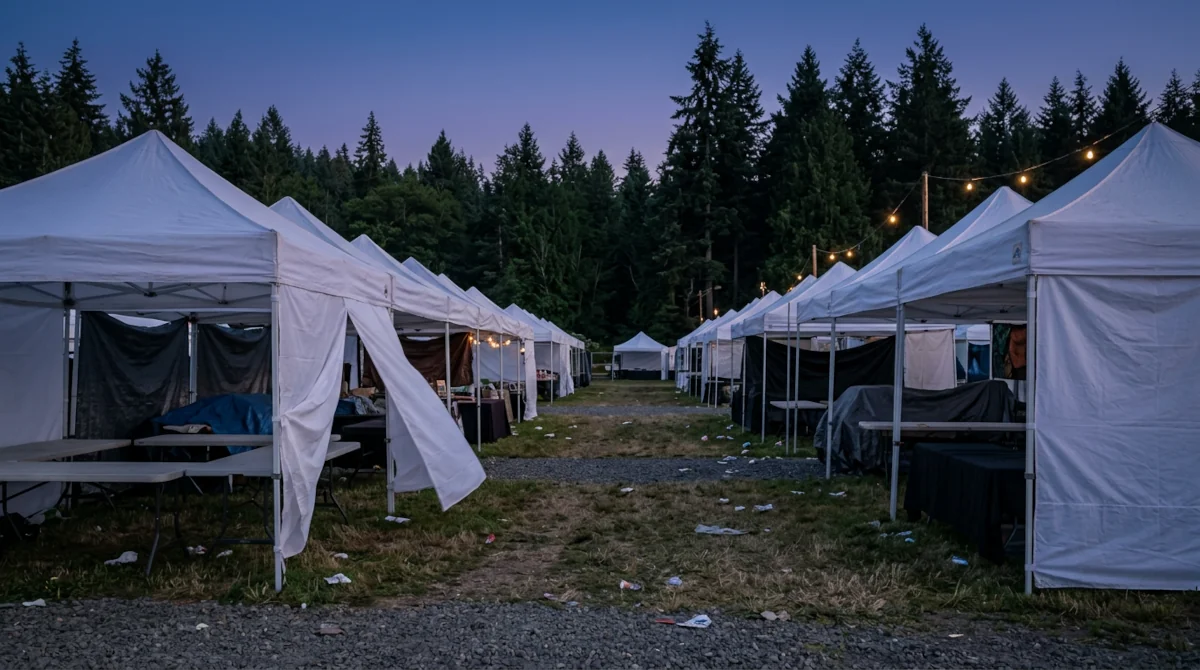
Festival vendor booths after hours - merchandise left overnight in open-sided tents with minimal security is where most event theft occurs.
The Math Problem: Why Security Guards Alone Don't Work for Most Events
Event security guards in the Pacific Northwest currently run $45 to $65 per hour per officer. For a three-day festival with 12-hour coverage, hiring just four guards costs $6,480 to $9,360. If you want 24-hour coverage - which you need if vendors are leaving inventory overnight - that doubles to roughly $13,000 to $18,700. For a weekend.
And that's before you account for the labor shortage that's been hitting the security industry hard. High turnover rates and flat growth projections mean that finding qualified event security staff - particularly for dates when every festival in the region is competing for the same guards - is getting harder every year. The global manned guarding market grew by $6.5 billion between 2025 and 2026, but that growth comes from rising wages rather than more available staff.
Even well-staffed security teams have a coverage problem. Four guards walking a 10-acre festival site can cover their immediate area. But a festival site has parking lots on the perimeter, vendor zones spread across multiple areas, equipment staging behind the main stage, restroom facilities, and entry/exit points. Four people can't be everywhere. And at 3 AM during the overnight shift, when the real theft risk peaks, fatigue sets in.
You still need guards. Trained people handle access control, crowd management, and incident response, and the fire code requires them for good reason. The trouble is that guards alone leave big blind spots, and those blind spots are exactly where the problems happen.
The World Cup Effect on Regional Event Security
When the FIFA World Cup comes to Seattle from June 11 to July 19, the security infrastructure impact extends well beyond Lumen Field. John Diaz's security operation involves 27 working groups coordinating across multiple agencies, with additional security deployed along Third Avenue, at transit stops, and near downtown fan zones. That draws from the same pool of law enforcement and private security personnel that every other summer event in the region depends on.
If you're organizing a festival, concert, or community event anywhere in the Puget Sound during those five weeks, your security staffing options will be more limited and more expensive than usual. Plan accordingly.
Where Mobile Surveillance Fills the Gaps
A mobile surveillance trailer covers the gaps between your security guards. For events, those gaps are predictable, which means you can plan for them.
Parking Lots and Perimeter Areas
For most outdoor events, the parking area is the single largest piece of real estate to secure - and the one with the least foot traffic from guards. Vehicle break-ins, catalytic converter theft, and car prowling all spike during large gatherings when thieves know owners are distracted for hours. A single trailer with a fixed fisheye camera for 360° overview, 3 PTZ cameras with 25x optical zoom and IR, and license plate recognition, positioned at the main lot entrance, provides continuous coverage of an area that would otherwise need its own dedicated guards to patrol.
Vendor Zones Overnight
The Bite of Seattle booth ransacking happened overnight, after the crowd left and security thinned out. A mobile surveillance unit parked at the vendor zone perimeter provides a visible deterrent - a 20-foot elevated camera platform is hard to miss - and continuous recording that captures anyone entering the area. AI-powered motion detection sends alerts to your phone in real time, so you or your security lead can pull up the live view and call police with video in hand, rather than discovering the damage the next morning.
Setup and Breakdown Periods
The window between load-in and doors-open is when the most expensive equipment is sitting unprotected. Generators, sound systems, LED walls, portable bars, food service equipment - all being staged in an open field or parking lot before the security team's contract clock starts. A trailer deployed the day before setup begins and removed the day after breakdown ends covers the entire event lifecycle, including the days when no attendees are on site.
Entry and Exit Monitoring
For events that charge admission, unauthorized entry is a direct revenue loss. For free events, monitoring entry and exit flow is still critical for capacity management and emergency planning. Elevated cameras provide a bird's-eye view of crowd density and movement patterns that ground-level guards simply can't see.
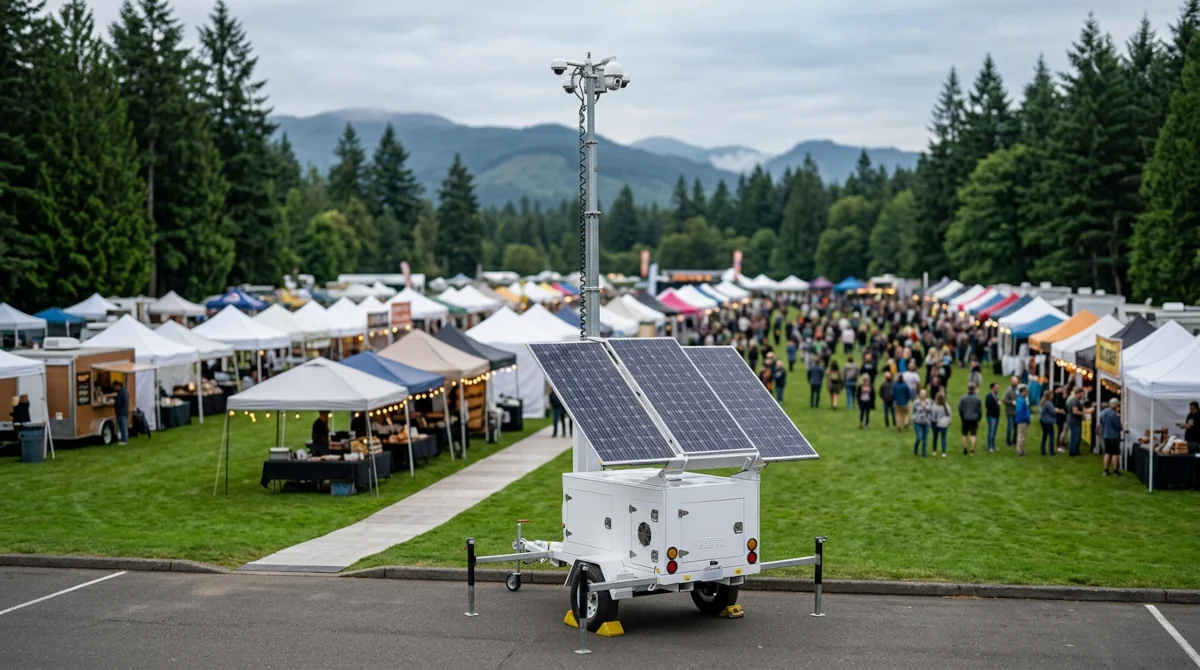
A mobile surveillance trailer deployed at an event venue - solar powered, a 360° fisheye plus 3 PTZ cameras at 20+ feet, covering parking lots and vendor zones around the clock.
What This Looks Like in Practice: A Three-Day Festival Scenario
Consider a mid-size community festival - something like Tacoma's Summer Blast or a multi-day farmers market event with 3,000-5,000 daily attendees, 40-60 vendor booths, a main stage, food court area, and a parking lot for 500 cars.
Traditional Guard-Only Approach
- 6 guards during event hours (10 AM - 10 PM): 12 hrs x 6 guards x $55/hr = $3,960/day
- 2 guards overnight (10 PM - 10 AM): 12 hrs x 2 guards x $55/hr = $1,320/day
- 3-day total: $15,840
- Coverage: Good for crowd management, weak for parking lot and perimeter, minimal overnight
Hybrid Approach: Guards + Mobile Surveillance
- 4 guards during event hours for crowd management and access control: 12 hrs x 4 guards x $55/hr = $2,640/day
- 2 mobile surveillance trailers covering parking lot and vendor zone 24/7 for 4-5 days (including setup day and breakdown day): call (253) 683-2288 for a quote
- 3-day guard total: $7,920, plus the trailer rental, with complete 24/7 coverage the guard-only approach doesn't provide
- Coverage: Crowd management handled by trained guards, parking and vendor areas covered by cameras with AI alerts to your team's phones around the clock
Trailer rental typically runs a fraction of what round-the-clock guards cost for the same hours, so the hybrid approach usually comes in under the guard-only budget while providing better actual coverage. More importantly, it provides the overnight and perimeter surveillance that guard-only setups almost always skip because of cost.
A Checklist for Puget Sound Event Organizers
The security fundamentals are the same for a 500-person block party and a 50,000-person festival. Work through these before you submit your permit application.
90+ Days Before the Event
- Submit your special event application through the city's permitting system (Seattle uses Eproval)
- Secure general liability insurance - $1M minimum per occurrence, $2M if serving alcohol
- Draft your Public Safety Plan if expecting 1,000+ attendees
- Contact King County Medic One if expecting 5,000+
- Book security staffing early - competition for qualified guards intensifies as summer approaches, and World Cup demand will thin the pool further
30 Days Before
- Finalize your site security map: identify all entry/exit points, parking areas, vendor zones, staging areas, and blind spots
- Arrange surveillance coverage for setup and breakdown periods as well as event hours
- Confirm crowd manager staffing meets the 1:250 ratio
- Coordinate with local police if your event involves street closures or expects significant crowd density
- Send vendor communication with security protocols: what's covered, what vendors are responsible for, overnight policies
Day-Of Checklist
- Verify all surveillance positions are operational before vendor load-in begins
- Brief crowd managers on emergency procedures and communication protocols
- Confirm medical staffing is on-site and positioned per your safety plan
- Test communication equipment (radios, phones) between security, medical, and event management
- Verify overnight security handoff procedures - who's covering what, and when
Planning for the Summer Rush
The Puget Sound's summer 2026 event calendar is extraordinary. Between the World Cup, Seafair, the Bite, the Washington State Fair, Bumbershoot, and the hundreds of community events filling every weekend, there will be more temporary outdoor venues operating simultaneously than any previous season. That's great for the regional economy. It also means more exposure to property crime and vendor theft, at a time when security staffing has been getting harder for years.
The organizers who get this right treat security as a full-lifecycle problem, from the day equipment arrives on-site to the day the last truck drives off, and they match the tool to the phase. Guards handle crowd management and incident response. Mobile surveillance covers parking lots, vendor zones, perimeters, and the overnight hours that guards alone can't cost-effectively cover. It doesn't take the biggest budget to do this well.
We've been providing mobile surveillance for outdoor events, festivals, and temporary venues across the Puget Sound since 2009. If you're planning an event this summer and want to talk through site coverage, we're happy to do a free walkthrough of your venue. Get in touch or call us at (253) 683-2288.
About CCTV Trailer
CCTV Trailer provides mobile surveillance solutions across the Puget Sound region, headquartered in Tacoma with same-day delivery throughout Pierce County and King County (call (253) 683-2288 to check availability). Our solar-powered trailers carry 4 cameras (1 fixed fisheye + 3 PTZ with 25x optical zoom and IR) with AI-powered analytics, 4G/5G connectivity for 24/7 self-monitoring and remote viewing on your mobile devices or computer, and elevated camera positions for maximum coverage area.
We work with event organizers, municipalities, construction companies, and businesses to provide flexible, effective surveillance coverage without the cost and timeline of permanent camera installations. Learn more about our team and technology.
Planning an Event This Summer?
Get mobile surveillance coverage for your festival, concert, or outdoor event - from setup through breakdown. Free site walkthroughs available.
✓ Same-Day Delivery Available ✓ Solar Powered - No Grid Needed ✓ 24/7 Self-Monitoring Overnight
Related Resources
Event Security Services
Mobile surveillance for public events, festivals, and outdoor gatherings throughout the Puget Sound region.
Learn more >Same-Day Security Rental
Emergency surveillance deployment for events and venues needing rapid security coverage.
Learn more >Security Trailer vs Guards
Cost comparison between mobile surveillance trailers and traditional security guard services for events.
Learn more >Vandalism Prevention Solutions
Protect vendor areas, staging zones, and event infrastructure from theft and vandalism.
Learn more >How Much Does a Security Trailer Cost?
What drives the cost of a mobile surveillance trailer rental - rental length, site, and configuration - and how to get a quote.
Learn more >Tacoma Public Space Safety
Data-driven look at Tacoma's public space safety challenges and the role of mobile surveillance.
Learn more >Washington Retail Theft Crisis
Organized retail crime is reshaping event planning in shopping-district venues across Washington.
Learn more >